Thursday, July 28, 2022

Daily Headlines for July 28, 2022

Assault Weapons Makers Testify They Bear No Responsibility for Gun Violence
A House panel found that the companies have thrived in the past decade by selling and marketing military-grade weapons to civilians, specifically young men.

Unlikely Fans of Supreme Court Ruling on Guns: Public Defenders
Judges in New York have so far rejected their argument that the decision should lead to the dropping of gun charges against their clients.

Taliban crackdown on rights is ‘suffocating’ women, Amnesty International finds

Knott’s Berry Farm extends ‘well-received’ chaperone policy to include Sundays

Parental Authority Gets a Boost From Dobbs

Ex-cops Kueng, Thao sentenced for violating Floyd’s rights

Brittney Griner testifies her rights were not explained when she was arrested in Russia

More LIV golfers destroy their reputations as they sports wash for MBS
At the Saudi LIV Golf circus in Bedminster, golfers have no idea how to say anything even remotely meaningful about the plight of women and LGBTQ people in Saudi Arabia.

For Women’s Cyclists, It’s a Steep Climb to Tour Equality
A women’s Tour de France is back after 33 years — a sign of progress, contestants say, for a sport sorely in need of it.

Column: Choco Taco isn’t ‘authentic,’ but this Mexican respects it. Sorry, Diana Kennedy

Piece of the Day: Sonny Rollins, "Pent-Up House"


Wednesday, July 27, 2022

A Slight Turn Toward Twee: The Potatomen, "Now"

The Potatomen, Now (Lookout Records, 1995)

I first learned about the now-defunct and much-missed Lookout Records through Maximum Rocknroll in the late 1980s—my first issue was #62 in July 1988. That zine and Lookout’s two-LP compilation The Thing That Ate Floyd opened up a whole new world of music for me, and as a teenager in the Midwest, northern California was definitely where most, if not all, of my favorite bands came from. I first heard Larry Livermore’s band the Lookouts on the Floyd comp and soon found my way to a used copy of one of the Lookouts’ 7-inch EPs (bought without the cover insert from the Cat’s Meow off State Street in Madison, Wis.) and his own densely-packed, verbose, and world-expanding zine, Lookout. As a youth, I was impressed by the sheer amount of writing Livermore was able to produce, as well as his—and David Hayes's (later of Very Small Records)—efforts to document the effervescent, energetic punk rock scene of San Francisco, Berkeley, and other parts.


The Lookouts weren’t active for long, and Lookout was never a vanity label, so between 1987 and 1991, there were just two albums and two EPs. Besides, there were plenty of other records to listen to, including Crimpshrine, Fifteen, Green Day, Monsula, Operation Ivy, and others. Regardless, the Lookouts stood out from the other bands and recordings on the label. They were a little more influenced by folk and other roots music, perhaps. A little older in its point of view. A little more based in or celebrating the value of place. 


Listeners didn’t have to wait long, though, for another band fronted by Livermore. The Potatomen came out with a demo tape in 1993 before releasing its first EP the next year. And this record, the Potatomen’s first album, was released in 1995. The album was recorded at Andy Ernst's Art of Ears in Hayward, Calif.


Already, Lookout had started looking beyond northern California, putting out records by Fun Bug (England), the Queers (New Hampshire), and Screeching Weasel (Chicago). In 1995, the label was expanding its scope even further. In addition to the 1995 album releases by Citizen Fish, the Mr. T Experience, and the Riverdales, Lookout was taking a slight turn toward twee pop and other sonic palettes with a Go Sailor EP (a joint effort by members of Tiger Trap and Henry’s Dress, and Paul Curran), a split EP with Cub and the Potatomen (one of the first co-releases with Canada-based Mint Records), and this album.


Five of the seven songs on the Potatomen’s demo tape appear on this record, performed by a trio consisting of Christopher Appelgren on drums, Patrick Hynes on bass and guitars, and Livermore on guitar and vocals. Appelgren had previously played in Bumblescrump (which released a split 7-inch with Rice) and would take the helm of the label in 1998 after Livermore’s departure. Hynes had largely worked as an artist and designer. And both Appelgren and Hynes were Lookout employees.


The Potatomen were originally intended as a Hank Williams cover band called the Hanks—and perhaps to be acoustic, often playing sidewalk shows—but soon transformed into the sound documented on this compact disc. At times sun-drenched jangly country; sometimes sounding like Buddy Holly-style pop, complete with hand claps; occasionally tinged with a thoughtful dark sadness suggesting the Chris Isaak-, Roy Orbison-, or Morrisey-like vocals that would show up on 1997’s LP Iceland; the bulk of the record is arguably not punk rock—though its intent and production was 100 percent punk.


The album offers ample lyrical content giving nod to the Bay Area punk scene, particularly in the song “Punk Rock Boy.” In various songs over the course of the album, there are references to girls, Gabe Meline (formerly of the zine Boy Does High School Ever Suck and now working for KQED—he even sang backing vocals on the song “Gabe Wonders Why”), skateboarding, fanzines, 924 Gilman, Cometbus, MRR, Absolutely Zippo, Fugazi, the Bay Area Rapid Transit, Telegraph Avenue, and other topics near and dear to me even today.


A couple of years ago, Don Giovanni Records reissued the Potatomen catalog, at least online, giving the songs—and stories—new life for listeners. Now is a sleepy Sunday kind of record, full of love for people, places, and the music they can make there. It's also a CD full of people and their stories. Despite being a slight anomaly for the original label, it’s a wonderful example of what made Lookout work so well while it worked well.


Daily Headlines for July 27, 2022

Op-Ed: If men were targets, abortion bans would be unimaginable

The NRA helped make it hard to study gun violence for decades. Now the floodgates are open.

Try to Resist the Call of the Doomers

Column: The version of me who entered 2020 no longer exists

Three New Books Challenge Preconceived Notions of Race
Far-left activists, scholars and journalists dominate the debate with views most black Americans reject.

47 House Republicans voted for gay marriage rights. Your turn, Senate GOP.
We acknowledge that some Republicans still remain firmly opposed to marriage equality. We respectfully disagree.

The Choco Taco, Ice Cream Snack of American Summers, Is Discontinued
A fixture of ice cream trucks and convenience stores is no more after Klondike said it would focus on other products.

Kyiv Nightlife Comes Back Amid Urge for Contact. ‘This Is the Cure.’
Frenzied raves. Crowded bars (with free therapy). And of course, cuddle parties. Nightlife is returning to Ukraine’s capital. But revelers still have to reckon with guilty feelings. Plus curfew.

Epstein associate Ghislaine Maxwell goes to low-security Florida prison offering yoga, Pilates

A 1941 Chevrolet Special Deluxe Rules the Wyoming Roads
Brad Poe drove this classic Chevy to the prom. His grandfather drove one while building fighter planes in World War II.

Song of the Day: Ibibio Sound Machine, "Protection From Evil"

Tuesday, July 26, 2022

Early Midwest Post-Punk: Ron House, "New Wave as the Next Guy"


Perhaps you’ve heard of Ron House. If you have, chances are you hail from the Midwest, perhaps Ohio, and specifically Columbus. If you haven’t, perhaps you’ve heard—or heard of—a couple of House’s other bands: Great Plains, which recorded several albums for Homestead Records in the 1980s, and Thomas Jefferson Slave Apartments, which put out its 1995 Bait and Switch on American subsidiary Onion Records.


At one time a student at Ohio State University, House, now in his mid-60s, has been active in the Columbus music scene since the 1970s, co-owning the Used Kids Records retail store for a couple of decades, and performing in a number of innovative DIY bands—most recently the Counter Intuits—as well as solo. This compact disc, released in the late 1990s by New York City-based label Spare Me (which also put out records by the Bevis Frond, Furniture Huschle, and the Gerbils) collects songs recorded in 1978-1981 by two of House’s earlier bands: Moses Carryout and Twisted Shouts.


Eight of the 18 raw, rough—yet well-recorded—songs “recorded in Columbus in various bars and basements” were previously released on the Old Age cassette, Blind Boy in the Backseat (its title song is included on this collection). The collection is an excellent document of early Midwest post-punk and is worth listening to even if you’re not already a fan of Great Plains or Slave Apartments. Most of the songs are performed in a three- or four-piece setting and usually involve House on guitar and vocals, Tommy Jay on drums or Casio, Chuck Kubat on the “audio generator,” Mike Rep on guitar or organ, Kim Workman on bass, and others. The line between Moses Carryout and Twisted Shouts does not seem to be that fine a line.


Highlights of the record include Moses Carryout’s “20 or 30 People” and its B-52’s by way of Joy Division guitar punctuation, the rhythmic guitar work by Mike Rep and Chuck Kubat’s mysterious “audio generator” on Twisted Shouts’ “Statues Lose” (a song that should be covered even today), Jay’s Casio work on “Where the Windows Are” and Rep’s organ on “New Maps of Hell,” the Cure-like cymbal clash of Moses Carryout’s “Street Was the Soundtrack,” the driving Joy Division-esque drone and David Kulczyk's synthesizer of Twisted Shouts’ “Legalized Emotion,” and the lyrics of “Cause Without the Rebel.” (My copy of the CD contains one glitch; you need to skip past "Chuck Berry's Orphan" because it skips.)


The CD also brings to mind the more recent lo-fi tape movement as represented by Dennis Callaci’s Shrimper Records and Tapes (not a surprise given Furniture Huschle’s recordings for Shrimper and Spare Me, and Franklin Bruno’s review of the Slave Apartments in CMJ New Music) and took this listener back in time to when anyone could be in a band if they wanted to, and bands could play—and record—almost anywhere. 


One article I found online mentioned Tim Anstaett’s Columbus-based zine The Offense, which was a contemporary, so I dipped into the first volume of The Offense Book of Books. There is House, mentioned in Don Howland’s Foreword and listed as a contributor (with Rep!) in The Offense #2 (1980). Twisted Shouts tied for third place in the zine’s first annual readers poll’s Favorite Band Seen at Brown’s category—and for second place in Favorite Local Band.


In a way, then, New Wave as the Next Guy also introduces—or re-introduces—a largely uncelebrated local scene that seems like it was particularly energetic and exciting at the time these songs were recorded. Moses Carryout and Twisted Shouts were just two bands of what might have been many at the time in Columbus, home of Ohio State University. House was not based in Akron, home of Devo, or Cleveland, where Pere Ubu was located. The scenes were independent and interrelated. If House’s early musical activity and the handwritten fanzine pages of The Offense are any indication, this was a lively time for local bands, shows, and record stores (House worked at local shop Magnolia Thunderpussy before opening Used Kids, where Rep also worked), if not radio programs.


Get thee to a local record store, listen to this CD, write a song, and make a tape. Then give it to a friend at the local college radio station. It’s that easy. Or it should be.


Daily Headlines for July 26, 2022

The Email No Parents Want to Get This Summer: Camp Is Canceled
Camps are dealing with rising Covid-19 cases as the BA.5 Omicron subvariant circulates

As Ukraine Signs Up Soldiers, Questions Arise About How It Chooses
Recruiters approach young men on the street, but the standards are not always clear and there are reports of unwilling men being signed up while some eager to fight are turned away.

Smuggling Migrants at the Border Now a Billion-Dollar Business
With demand for smugglers on the rise, organized crime has moved in, with cruel and violent results.

Sixth Teenager Charged in Central Park Jogger Case Is Exonerated
Steven Lopez had a robbery charge linked to the 1989 attack cleared from his record.

Wanted: Star power, rivalries, villains. Track races to grow in popularity in the United States.
With nearly 2,000 athletes participating in the first track and field world championships in the U.S. and 33 medals from Americans, why wasn't there more interest in the States?

Roland Martin believes in Black-owned media, and he’s using his own money to prove it

How an Associated Press reporter broke the Tuskegee syphilis story

CEO Buys 3BlackDot, Making It One of the Few Black-Owned Media Companies
Business now owned by Reginald Cash is focused on videogamers and helps brands market themselves to underrepresented communities

Meta to Let Facebook Creators Earn Money for Videos With Music
Revenue-sharing feature is social-media platform’s latest move to combat rival TikTok

Sandy Hook Parents to Testify Against Alex Jones, and a Culture of Lies
The families of 10 victims have waited years to hold the Infowars conspiracist and the political environment that enabled him to account.

Song of the Day: Elvis Presley, "Young Dreams"


Monday, July 25, 2022

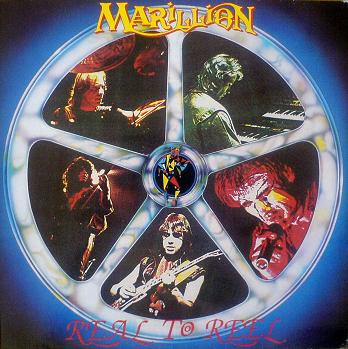
Vaguely Disconcerting: Marillion, "Real to Reel"


I was slow to come to Marillion, and I’m still not sure they’re entirely my bag. But there’s definitely something going on with them—something artistically creative and attractively bizarre. My first introduction to Marillion occurred while I was living in Boston during the late 1990s; a Newbury Comics staffer had slotted Marillion’s album Fugazi in the Fugazi section, perhaps as a joke, and I was momentarily confused. I did not buy the record, but it was evident from the cover design and label alone that it wasn’t the Fugazi I knew and loved. (The band Fugazi didn’t even form until 1986.)


A few years ago, I messaged my friend Chris, who’s the most progressive rock-oriented among my friends—in 2014, he recommended a couple Hawkwind records to me—“Your assignment today, should you choose to accept it, is to listen to Marillion's ‘Grendel.’” He replied, “Shall! Last time I tried Marillion, it didn't stick, but people change and grow!” That took me aback. If my friend most sympathetic toward prog rock doesn’t dig Marillion, what the heck is going on?


Turns out that I might not dig them entirely, either, but I wouldn’t—I can’t—dismiss them entirely. They are a mystery to me. This live album, originally released in 1984, was later reissued on compact disc as a double CD along with 1986’s Brief Encounter. This review focuses only on the Real to Reel CD in that reissue.


Real to Reel contains two songs—”Forgotten Sons” and “Garden Party”—taken from the band’s first album, 1983’s Script for a Jester's Tear. It also includes “Assassing” and “Incubus” from Marillion’s second record, the above-mentioned Fugazi from 1984. Add a couple of songs not released on albums—“Market Square Heroes,” the band’s debut single A-side from 1982, and “Cinderella Search,” the B-side to the “Assassing” single—and the original live album was a good survey of their work so far. This CD reissue also features a live recording of “Emerald Lies,” which originally appeared on Fugazi.


As a live recording, Real to Reel is slightly more miss than hit, and you might be better off listening to the first two albums. While the songs are there, as interesting as they are, the energy and intensity I hope for from live albums isn’t really present. (Though the crowd noise and participation in “Garden Party” and “Market Square Heroes” communicate some impressive audience enthusiasm.) The first four songs of the reissue CD—”Assassing,” “Incubus,” “Cinderella Search,” and “Emerald Lies”—were captured June 19-20, 1984, at the Spectrum in Montreal. The remainder were recorded during Marillion’s March 5, 1984, performance at De Montford Hall in Leicester, England. Both seem to have been relatively restrained and controlled performances. It’s not that the band performs entirely tightly, but there’s little chaos or risk of losing control. Regardless, ending with “Garden Party” and “Market Square Heroes” was a good call—the pairing makes a great finish to the album—a highlight, so it's worth making it to the end.


Highlights of the performance include Steve Rothery’s guitar work (at rare times reminding me of David Gilmour) and Mark Kelly’s keyboard playing—both requirements for decent prog rock. And one of the most fascinating and occasionally challenging aspects of the band and show is Fish’s vocals.


Fish, a Scotsman born Derek William Dick, joined Marillion in 1981 and stuck with the band through 1988. Extremely dramatic in his vocal presentation, he’s been described as similar to Roger Daltrey and Peter Gabriel (some fans compare Marillion to Gabriel-era Genesis, if you’re into that sort of thing), and Classic Rock magazine named him among “The 100 Greatest Frontmen” in 2004.


Throughout the performances, Fish brings no little high drama, with a theatrical vocal style that alternates between aggressively dramatic vocalization, sing-song accented speak-singing, and occasionally strident barking. Fish is most interesting when he’s not necessarily singing in the traditional sense, though the end result can get to be a bit much over the course of the record. (He’ll either grow on me or wear me down!) 


At its best during these sets, Marillion brings a more rock ‘n’ roll Pink Floyd and early Yes to mind. At other times, the band is vaguely disconcerting and somewhat threateningly confusing. Again, I’m not exactly sure what’s going on, but something is definitely going on.


Song of the Day: The Everly Brothers, "All I Have to Do Is Dream"


Daily Headlines for July 25, 2022

Young Adults Tend to Stay Close to the Nest
Census data indicate local wage gains go largely to workers from the area

Amid threats to their safety, public officials increase security at meetings

ICE has resumed deporting unsuspecting immigrants at routine check-ins

Vibrators, Weed, Plants: What Can You Take on a Plane?
Can you bring safety pins in your carry-on? What about a pool cue? Or how about a snow globe? The answers to those questions, in order, are yes, no and it’s complicated.

Surfing: Los Courage Camps in photos

Sharing Stories, and a View, Aboard the California Zephyr
A photographer traveled across America on one of Amtrak’s long-distance train routes. Here’s what she saw.

Would you do a 102-degree freefall? This gravity-driven cliffside roller coaster packs a 'punch'

Column: Why do people believe in conspiracy theories?

Ever younger ‘kidfluencers’ face online dangers
Thrust into stardom as young as five or six, can they understand the world they’re in?

Ties Between Alex Jones and Radio Network Show Economics of Misinformation
The Genesis Communications Network built a lucrative business alongside the radio host, whose show the company has syndicated for more than two decades.

Sunday, July 24, 2022

Experiencing Joy: Joseph Spence, "The Complete Folkways Recordings 1958"

Joseph Spence, The Complete Folkways Recordings 1958 cassette (Smithsonian Folkways, 1992)

Sometimes I think about what it must have been like—what it must have felt like—to have been the first human being to approach Niagara Falls. As you approached through the trees or grassland, whatever foliage was there before much later residents established a built environment, the first thing you’d experience would be the sound of the falls: 5.9 million cubic feet of water every minute. 


Imagine the initially muffled, then ever-growing roar as you approached—before you even saw what was making the sound. That must have been strange, curious, perhaps terrifying—and once you reached a point from which you could see the falls—wonderful. Imagine, though, how it would have felt to wonder what was making that sound, the sound of Niagara Falls, as you approached. What could it possibly be? What wonder or horror lay ahead?


Listening to this 1992 cassette of the 1959 and then 1964 release of the music included on Joseph Spence’s The Complete Folkways Recordings 1958, I also think about how Samuel Charters must have felt as he walked through the Fresh Creek Settlement on Andros, there to collect traditional Bahaman folk music.


“Some men were working on the foundation of a new house, and as we came close to them we could hear guitar music. It was some of the most exuberant, spontaneous, and uninhibited guitar playing we had ever heard, but all we could see was a man in a faded shirt and rumpled khaki trousers sitting on a pile of bricks,” Charters wrote in the liner notes to this tape. “He had a large acoustic guitar in his lap. I was so sure two guitarists were playing that I went along the path to look on the other side of the wall to see where the other musician was sitting. We had just met Joseph Spence.”


All hyperbolic comparison aside, both Niagara Falls and Joseph Spence, who died in 1984, are forces of nature. If you’ve never listened to Spence, you owe yourself the meeting of his music. Similar to how Charters described Spence’s playing, I’ve never heard music so enjoyed by the performer, much less his audience. 


Spence must have been experiencing joy—or close to it—while playing for the visitors and their tape recorder. You can hear it in his energetic improvised lines diverging from the melodies of the mostly traditional songs. (Beetlejuice viewers will get a kick out of his rough-hewn take on “Jump in the Line.”) You can hear it in Spence’s persistent foot tapping, his periodic growls and sotto voce singing, and his occasional laughter as he surprises and delights even himself—or responds to those listening. This is among the most human music I’ve ever heard. It’s also among the most happy.


In a delightful bit of serendipity, these songs were recorded on July 23, 1958. I listened to the tape for the first time in a long time on that date—just yesterday, more than 60 years after it was recorded, to the day. Listening on a portable cassette player with headphones on the couch of my living room, I was right there and then, too, on the porch of Charters’s little rented house as Spence played for the visiting strangers. I can't wait to return.