Showing posts with label music. Show all posts

Wednesday, July 29, 2026

Newspaper Music

For quite some time now, I've been making Spotify playlists of songs mentioned in or inspired by articles in the magazines and newspapers I read. The practice might date back to my Media Diet email newsletter, seems to have become more formal and frequent in 2021, and became much more important and interesting to me when I moved to Portugal late last year.

After relocating, the effort served a three-fold purpose. In addition to reading Portuguese newspapers such as Correio da ManhãJornal de NotíciasPúblico, ExpressoCorreio do Minho, and Diário do Minho, and magazines such as TV 7 Dias, TV GuiaSábado, and Visão for local, regional, and national news, as well as learning the language, it also offered a crash course in Portuguese popular music—past and present. Portuguese newspapers and magazines do a good job covering local arts activities, including upcoming concerts, festivals, and other events—with a strong focus on Portuguese musicians in addition to touring international acts.

When compiling the playlists, which can take some time, I apply several "rules." If a song isn't named explicitly but a musician or musical group is, I pick one of the most-played songs on Spotify—unless I've previously included it in a similar playlist. If a song is named explicitly by title, I include that song—even if it results in including more than one song from a particular musician or band. Otherwise, I try to include one song per musician or band (or composer, in the case of classical music). I tend to try to include album cuts rather than single edits, live versions, or songs from best-of anthologies or compilations, though I sometimes rely on such records for expedience. And if a song has been remastered, I try to include the most recent remaster. That might seem like a lot of hoo-hah, but I think it results in me including a definitive version of a song. Whatever that means.

If I can't find a musician or band—or if I'm unable to determine which musical group is the band in question—I exclude the track, so not everything covered by the press ends up on the playlist. And when I finish the playlist, I share it as an Instagram Story. I don't really pay any attention to whether anyone else saves the playlist in Spotify, which seems the strongest signal indicating that others are also listening.

While compiling the most recent week's playlist—Newspaper Music: Week of July 20, 2026—which I finished yesterday, the enormity of the task and result struck me. (It makes sense that I've taken a couple of months off!) This week's playlist weighs in at 375 songs, or more than 24 hours of music. That's a far cry from compiling a 60- or 90-minute mix tape. 

I've already stopped doing this on a weekly basic—I don't always read all the papers and magazines every week, there are other ways to spend time in a new country, and, more importantly, I don't always listen to all of the songs and pieces myself. So I'm going to institute a new rule: I will compile the next Newspaper Music playlist once I've listened to all of the most recent playlist myself. I've been missing out on the true value of the musical education component of this practice: Experiencing the actual music.

If you'd like to check out some of the other playlists I've compiled along these lines, here are some additional links:

Media Diet 20210619 | Media Diet 20210905 | Media Diet 20211009 | Media Diet 20211205 | Media Diet 20220312 | Media Diet 20220416 | Media Diet 20220522 | The Week That Will Be 20220621 | Songs of the Weekend 20230409 | Week of 20241104 | Week of Feb. 3, 2025 | Week of May 12, 2025 | Week of Dec. 22, 2025 | Newspaper Music w/o Jan. 5, 2026 | Newspaper Music: Feb. 16, 2026 | Newspaper Music: March 23, 2026

I believe you can access even more playlists here.

Friday, August 05, 2022

Acoustic Trip Hop: Ui, "Lifelike"

Ui, Lifelike (Southern, 1998)

Among the other post-rock bands that hit my radar and tickled my fancy in the mid-1990s, I didn’t listen to Ui as much as I did Tortoise and Trans Am, and perhaps even less than Gastr del Sol, Isotope 217 and the adjacent Chicago Underground Orchestra (or duo or trio or quartet, depending). Hailing from the Midwest, much of my attention was Chicago-centric, so it surprised me to learn that Ui was based in New York City—even if they signed to the Chicago-based label Southern after a show at the Lounge Ax. You can’t get much more Chicago than that! (Trans Am was based in Maryland, so Chicago—even though it was a center for post-rock—did not hold sole claim to the sound.)


In some ways, Ui’s music falls squarely near the center of post-rock, in that it’s instrumental music and utilized traditional rock instrumentation with electronics while eschewing rock song structures or elements. Ui expands on that a little bit with its focus on the bass rather than the guitar (occasionally reminding me of Morphine)—the band features two bassists—and the use of other instruments, including keyboards and horns.


In fact, with only three members—Wilbo Wright on basses, keyboards, and cello; Clem Waldmann on drums and percussion; and Sasha Frere-Jones on basses, guitar, keyboards, auxiliary percussion, sampling, and sequencing—Ui obtains a relatively full sound on Lifelike, its second and penultimate album. (Its final album would come but four years later.) The pieces incorporating horns—with eight United Kingdom- and United States-based players credited in the liner notes—sound even more full, incorporating jazz and subtle classical sensibilities.


The resulting sound skews closer to electronica and dub than other post-rock acts, as represented by the penultimate track on the compact disc, “Acer Rubrum.” It’s as though Medeski Martin & Wood studied with Kenneth Gaburo or Eugene Chadbourne led the Beastie Boys for The In Sound from Way Out! Call it acoustic trip hop even though it's not acoustic. Subtly funky and groove-oriented, the band stops shy of jamming, with pieces on the CD ranging between two and five minutes in length. Part of me, however, would like some of the songs to last longer, as though Stereolab were part of the Washington, D.C., go-go scene. Perhaps, even, forever.


Highlights of the record include the cascading guitar lines in “Blood in the Air,” the trumpet entrance several minutes into “Undersided,” the multi-layered groove and steady decay and degradation of “Digame” (the piece just falls apart at the end), “Green of the Melon” in its entirety, and “The Fortunate One Knows No Anxiety”’s loosely tuned persistent progress.


Even though I bought this CD upon its release, I didn’t make the connection between the Sasha Frere-Jones of the band Ui and the Sasha Frere-Jones of The New Yorker and other writing until this week. Previously contributing to such diverse periodicals as Ego Trip, Jessica Hopper’s Hit It or Quit It, and The Wire, Frere-Jones joined the staff of The New Yorker in 2004—following the release of Ui’s final album, Answers, in 2003. He continued working for the magazine until 2015.


These days, you can still find Frere-Jones’s writing in The New Yorker sometimes, as well as in 4Columns, Artforum, Observer, and other outlets. Ui might no longer be performing, but his writing remains relevant and thought provoking. Meanwhile, Wright continues to perform; sells, transports, and plants trees; teaches music lessons; and hosts a radio show on Princeton’s radio station, WPRB-FM, every Tuesday from 12-3 p.m. ET. (WNUR-FM alumnus Jon Solomon also hosts a show there.) Waldmann, also a member of the Loser’s Lounge, went on to record and perform with the Blue Man Group, and more recently recorded with George Faulkner of the Rabies. (Incidentally, in the early days of the Blue Man Group’s Boston outpost, I ushered for a performance so I could see them for free; it was awesome then—I can only imagine what it’s like now that they’re owned by Cirque du Soleil.)


This album was kind of a sleeper when it first came out. Even slumbering for almost 25 years, Lifelike remains worth listening to—and pleasantly surprising throughout. I should’ve paid more attention to Ui when they were still around. Because then I might have listened to this record more over the intervening years.


Thursday, August 04, 2022

Yearning to Be Heard: Kenneth Gaburo, "Five Works for Voices, Instruments, and Electronics"

Kenneth Gaburo, Five Works for Voices, Instruments, and Electronics (New World, 2002)


The tray card for this compact disc is labeled “File Under: Classical/Contemporary: Gaburo, Kenneth.” That might have been helpful in some record stores. Is Gaburo’s work classical music? (Yes.) Electronic music? (Yes.) Something entirely other? (Oh, gods, yes.)


The five pieces on this CD were recorded between 1956 and 1974. According to Warren Burt’s expansive and insightful liner notes in the booklet, Gaburo was not that involved in the “more establishment new-music scenes of the day, such as in New York.” In fact, despite his importance for and influence on later experimental composers (Gaburo associated with Harry Partch and Pauline Oliveros), he became increasingly alienated from his largely academic environment—he taught at the University of Illinois and the University of California, San Diego—and eventually turned to freelance work and semi-desert life before returning to a teaching post at the University of Iowa. There, he led the gloriously interdisciplinary and perplexing Seminar for Cognitive Studies, dying in Iowa City in 1993.


Gaburo composed for instruments, voices, electronics, multimedia, and theater—in the 1950s onward. These early examples of contemporary classical or new music incorporating electronics drew on the resources and research facilities of the academic institutions for which he worked.


The first piece on the CD, “Antiphony IV (Poised),” was recorded in 1967. Featuring a setting of piccolo, bass trombone, double-bass, and voice on tape, the piece showcases members of the University of Illinois Contemporary Chamber Players. The instruments provide an environment for Barbara Dalheim's left-channel vocals, which recite a very brief poem by Virginia Hommel, vocalizing  only the phonemes, the smallest unit of speech, rather than word, phrase (or foot), line, or stanza. The composition effectively stages and deconstructs the presentation of the poem, illegible to human understanding but still extant. I can hardly believe the piece is nine minutes and 34 seconds in length; every time I’ve listened to it, it’s over before I know it. A piece to fall into.


The second piece, 1956’s “String Quartet in One Movement” features the Walden String Quartet performing the most straightforward neoclassical composition on the recording. More traditional listeners of classical music might find this composition more accessible than the others offered here—but still challenging.


1970’s “Mouth-Piece: Sextet for Solo Trumpet,” is performed by Jack Logan. In the piece, Logan strives to play six contrapuntal—independently melodic—lines at the same time with some semblance of equality. Meanwhile, the performer is not playing the trumpet in the usual manner. Instead, he is vocalizing, speaking, and sounding through and with—sometimes against—the trumpet. Brass instrument as voicebox, if you will. The trumpet filters each phoneme vocalized as Logan speaks and sings a poem written by Gaburo. During live performances, the performer was accompanied by three projections: the score, written using non-standard notation; each word being vocalized by way of phonemes as the piece proceeds; and the poem as a whole to represent the entirety of the piece. The result, perhaps even more unintelligible than “Antiphony IV (Poised),” is riveting, surprising, occasionally funny—but never silly. This is serious play. And at not quite six minutes in length, it also seems much too short.


“Antiphony III (Pearl-white moments),” then, is my favorite of the selections. Recorded in 1962, the piece was composed for 16 voices and electronics. Performed by the New Music Choral Ensemble, the piece presents another poem written by Hommel, with the 16 voices vocalizing each word of the poem in order, sometimes out of order, as some voices are presented on tape and others altered electronically. As the piece progresses, non-vocal electronic sounds come into play, as well. Even though the words are spoken, whispered, barked, and sighed, the piece does not result in a comprehensible poem as such. This time, the piece utilizes words as musical notes, voice and breathing body as instrument, and electronic tape as instrument—resulting in a wondrous, compelling, and almost hypnotic music of yearning to be heard, if not understood. Parts of the 16-plus minute piece reminded me of Noh theater without the dance—the presentation of the incomprehensible poem as a whole providing the drama.


The final piece, “The Flow of (u),” was recorded in 1974 and is a setting for three voices. The basic idea of the piece is “one note sung by three singers for twenty-three minutes.” And the result is similar to the Noh-like fugue instilled by “Antiphony III (Pearl-white moments).” Pure sound, almost a drone element, as the three singers—here, Elinor Barron, Philip Larson, and Linda Vickerman—attempt to stay in tune, alternate breathing without breaking the tonal quality of the piece, and navigate the psycho-acoustic elements that come into play. Even while striving to stay in tune, adjacent sounds vibrate, and occasionally one hears overtones or sounds that might not even be there. This is definitely a piece to listen to with headphones, as well as with room sound. It is decidedly minimal music, but maximal at the same time given its need for stamina, dedication, and concentration, even as a listener. (Admittedly, the first time I listened to it with headphones, I drifted off. This time, listening again as I write, I


entered


another state

of


being

.

)


Wednesday, August 03, 2022

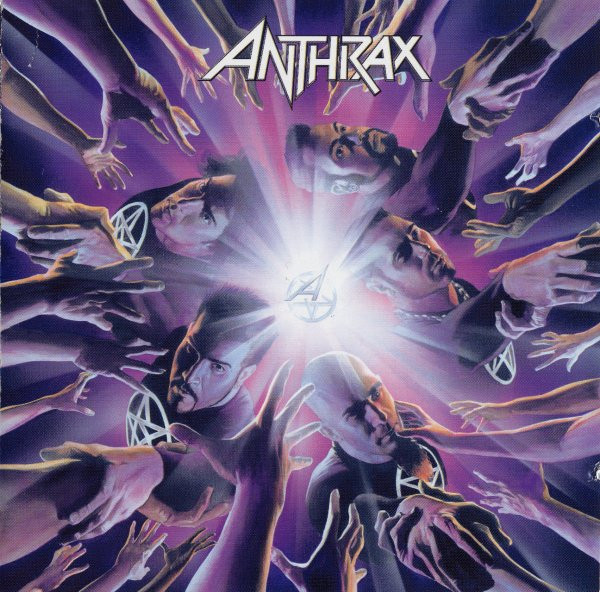
Groove Power: Anthrax, "We’ve Come for You All"

Anthrax, We’ve Come for You All (Sanctuary, 2003)

Though I consider myself an Anthrax fan, I’ve woefully neglected the John Bush years almost entirely. After playing with Los Angeles-based band Armored Saint from 1982-1992, Bush replaced singer Joey Belladonna in 1993 for the album Sound of White Noise. He stayed with the band until 2011’s Worship Music, when Belladonna returned. In the interim, Anthrax released a total of four studio albums with Bush, none of which I’ve given a proper listen.


Armored Saint, a wonderful band in its own right, meanwhile, largely went on hiatus between 1991 and 2000, when Bush returned to the band—singing for both Anthrax and Armored Saint for a short time. (This timeline is based on record release dates; recording dates and live performances might tell a different story. And another singer, Long Island metal head Dan Nelson, intervened briefly before Worship Music; Belladonna re-recorded his vocals.)


So listening to this record is similar to listening to Anthrax for the first time all over again. It’s a very different band. Not only is Bush’s singing style different from Belladonna’s vocals—long an attraction for me—the band’s approach to music is different when performing with Bush. While earlier Anthrax records—even those with original singer Neil Turbin and earlier band members Dan Spitz and Dan Lilker (who went on to S.O.D., Nuclear Assault, and an online radio show with Gimme Metal)—were more thrash metal oriented, with Bush as front man, Anthrax is much more groove oriented, what some might call alternative metal, “power groove,” or even straight-forward hard rock. The band is older, perhaps wiser. Released after Sept. 11, 2001, We’ve Come for You All is decidedly less fun than the records with which I’m more familiar.


The music is still ably played. Bush’s vocals are athletic and forceful, and the tried-and-true combination of Frank Bello on bass, Charlie Benante on drums, and Scott Ian on rhythm guitar continues to impress and delight. The band was also joined by Rob Caggiano on lead guitar for the first time; he later went on to play with Cradle of Filth and Volbeat. Several guests also appear on the record, including Dimebag Darrell of Pantera, Anthony Martini of rap metal act E-Town Concrete, and Roger Daltrey—though minimally.


Lyrical content touches on the topics of persistence, struggle, independence, love, reciprocity, nostalgia, cars, and betrayal. Despite a couple of potential pop culture references—”Black Dahlia” lightly addresses the 1947 Los Angeles murder case, perhaps from the point of view of the killer, and “Cadillac Rock Box” is more about driving than the car make specifically—the record is light on what used to be an Anthrax hallmark. 1987’s Among the Living included songs based on Stephen King’s novel The Stand and Judge Dredd comics, for example. That said, celebrated comic book artist Alex Ross painted the cover—a stoic group portrait of the band and its fans, perhaps, but not Ross’s best work. It’s good to know that Ian and the band still have an interest in comics.


While it might not be the Anthrax I know and love, it’s still Anthrax. And that means something. Many critics reviewed the record positively—noting its more radio-friendly approach—and the record reached 122 in the U.S. Billboard 200. Yet while I don’t quite like the idea of ignoring two decades of a band’s recorded output, I much prefer Anthrax’s records up through Persistence of Time and from Worship Music onward. I also much prefer listening to Armored Saint, so it can’t just be Bush. Regardless, call it the Belladonna Effect; there might be some heavy metal alchemy at play. I’ll have to spend time with Sound of White Noise, Stomp 442, and Volume 8: The Threat Is Real to see if that preference holds.


Tuesday, August 02, 2022

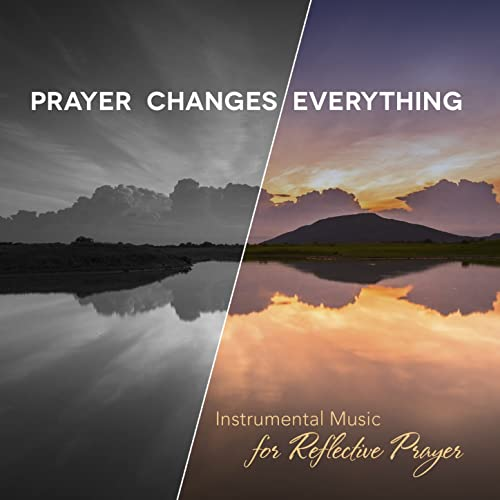
Borderline New Age: Phillip Keveren, "Prayer Changes Everything"


This compact disc of “instrumental music for reflective prayer” was offered by the devotional magazine Our Daily Bread. Apparently uncredited on the cover and tray card, the insert includes a personal message from Phillip Keveren, who plays keyboards on the recording and arranged six of the 10 pieces. Kent Hooper, also on keyboards, arranged the remainder.


The music is performed by seven musicians led by Keveren and/or Hooper and includes flute, oboe, guitars, and percussion. Some of the pieces also involve the Sacred Arts String Ensemble, which might be a larger or similar setting of the Sacred Arts String Quartet or Sacred Arts Strings, which Keveren had a hand in. Only the concertmaster and contractor of that ensemble receive credit. Unlike most meditation or spa music (its own distinct genre!) I’ve encountered, the music—while calm and largely soothing—is more inspirational and upbeat in its tempo and structure. Prayer, though reflective, seems intended as an uplifting experience.


Opening with “Pray for Me,” an instrumental cover of Michael W. Smith’s single taken from his 1988 album I 2 (Eye), the initial sensation is borderline new age music, with Hooper’s keyboard work slightly more synthesizer oriented. The pieces Hooper arranged seem to feature synths more forwardly, while the pieces arranged by Keveren largely do not. (Actually, some do, such as “Take My Life, and Let It Be” and “In the Garden” though the synths are more muted in those cases, providing more background wash or swell than the occasional bleep and gurgle, which I welcome.)


The bulk of the songs other than the Smith cover are traditional hymns, with one—Hillsong’s “Lead Me to the Cross”—stemming from more recent devotional music currents. Of the two arrangers, I prefer Hooper’s arrangements—”Pray for Me,” “Lead Me to the Cross,” “On My Knees,” and “The Lord’s Prayer”—because they edge closer toward new age music. (“On My Knees” even includes pleasant Enya-like portions, reminding me of “Orinoco Flow.”) For the most part, however, the music is gentle, minimal—though not minimalist—music along the lines of a simpler Windham Hill or Dan Gibson’s Solitudes without the natural sounds. That both of those labels are now defunct saddens me.


Erik Gratton’s flute features prominently in “Sweet Hour of Prayer,” paired with Bill Woodworth’s oboe for duet sections. Woodworth also features in “Take My Life, and Let It Be,” offering a nice counterpoint to the predominant piano. A guitarist takes the melody line briefly in “Lead Me to the Cross” before returning for a triumphant ending. For the rest of the CD, the keyboards—the piano, really, if it be one—takes lead in most cases, with the other instruments there merely for variety.


As a prayer or meditation aid, the music is a bit dramatic and energetic for me; I’d find it distracting, though it could make excellent music for focused work. If a listener is more familiar with the hymns featured, their lyrics might come to mind, either aiding one’s prayer or meditation, or perhaps distracting one with the lyrical content.


The recording is an interesting project, one which inspires me to ask who its intended audience is. Was it merely intended as a premium for Our Daily Bread readers? Is there a market for instrumental devotional music? If so, how large is it?


Monday, August 01, 2022

Friendly Exhortations: Long Way, "We Got a Long Way to Go…"

Long Way, We Got a Long Way to Go… demo cassette (self-released, 1999)

This is a seven-song demo tape from a Rio de Janeiro, Brazil-based pop punk band called Long Way. Recorded March 24 and 26, 1999, the songs were performed by a four piece made up of Vinicius (guitar and vocals), Marcos (drums), Edson (guitar), and Claudio (bass and vocals)—and written collectively.


Sung in English, the music is high-energy pop punk that reminds me of melodic Dischord-style hardcore—the vocals occasionally bring Minor Threat or Seven Seconds to mind—and California pop punk, with simple, single-note guitar solos along the lines of Screeching Weasel. 


The handwritten insert offers lyrics in English and Portuguese, as well as several friendly exhortations such as “Read zines”—calling out the Brazilian zines Enizzine and No Fun Zine—“Go to shows,” “No violence at shows! Pogo happily to the sound of the Long Way,” and  “Any form of prejudice, whether racial, social, sexual, to different people—all prejudice—is shit.” Liner note marginalia also says, “Lyrics and vocals by their respective authors,” “Society often tries to reduce us to a simple number: a CPF, a grade at school, a paycheck, a statistic. Value yourself; don't lose sensitivity. Be human and be happy!” and “Booklet by Vinicius Mitchell, Rio de Janeiro, 1999.” Almost 25 years after this demo came out, I reached out to a Brazilian illustrator and comics artist named Vinicius Mitchell to see if they’re the same person. We shall see!


Long Way offers an energetic, friendly approach to pop punk, with tuneful songs, solid choruses—particularly on “Don’t Judge Me” and “Hopeless”—and largely positive lyrics. I can only imagine the local scene in Rio de Janeiro at the time; Long Way would have fit easily onto the bill for many shows I’ve gone to over the years in Chicago, San Francisco, Boston, New York City, and now Los Angeles. I would have loved to see them live. Additional bands (Freakanoise, Dirty Shoes, YAWL, New Born Generation, Speak Clear, PPZ, and Surface—assuming they’re all bands) and zines (Trapilho, PV, and AFL) are listed in the thank you section.


Song lyrics address topics including living life to the fullest; individualism; making choices; the 1970s Mexican situation comedy El Chavo del Ocho, which was dubbed in Brazilian Portuguese in the 1980s; hopelessness; conformity; and challenging relationships. Despite some sense of concern or complaint in some of the songs, the tenor overall is one of hope and optimism. By finding our own way in life and developing a strong sense of self, we can overcome day-to-day challenges and problems.


The seven songs are recorded on one side of a tape. When the songs end, there’s little one can do but rewind and listen to them again. Seven solid songs! I wonder whether the band recorded anything else—and what’s happened to everyone since this demo was released. I hope they’re all doing well. I’ve enjoyed revisiting this demo.

Sunday, July 31, 2022

Oddly Poetic: Killing Joke, "Revelations"


I first heard Killing Joke courtesy of Metallica’s 1987 The $5.98 E.P.—Garage Days Re-Revisited. On that five-song budget EP, Metallica shared their take on “The Wait,” gleaned from Killing Joke’s 1980 self-titled album. Even though I bought this compact disc in 2016, I hadn’t spent much time absorbing Killing Joke’s approach to music over the intervening years until listening to this record this afternoon.


Remastered and reissued in 2005, Revelations is the band’s third album, originally released in 1982. The reissue, digitally remastered by Steve Rooke at Abbey Road Studios in London, contains the 11 songs originally on the album as well as a bonus track, an alternate mix of “We Have Joy.” It is also the last album featuring Killing Joke’s original lineup—until 2010’s Absolute Dissent.


At the time the record was originally released, the band comprised Jaz Coleman (vocals and synthesizer), Paul Ferguson (drums and vocals), Geordie Walker (guitar), and Youth (bass). (The much more recent Corpus Mei, recorded by Crass’ Penny Rimbaud and Youth is an exceptionally excellent record.) Recorded in Germany, the album was produced by Conny Plank, marking the first time Killing Joke didn’t produce a record themselves. (Plank had done earlier work with Neu! and Kraftwerk, so the pairing might have seemed promising.) Because I’m not a student of Killing Joke, I cannot remark on any differences that his production introduced.


On the whole, the record is darkly tribal post-punk, with the drum and bass offering a compelling undercurrent to the largely discordant, jagged, angular guitar work. Ferguson’s dramatic vocals and synthesizer work are a highlight of the record, indicating the influence Killing Joke would have on later darkwave, gothic, and industrial acts. 


The first four songs of Revelations—“The Hum,” “Empire Song,” “We Have Joy,” and “Chop Chop”—are an awesome introduction to the band and album. “Empire Song” was released as a single and performed on Top of the Pops on television, though without Coleman. Then the record lands on “The Pandy’s Are Coming,” an oddly poetic song, before returning to “Chapter III,” which is more in line with the earlier songs.


The next three songs on the record diverge slightly, still offering darkly tribal post-punk, but with a slightly stronger pop or rock orientation. I can hear hints of XTC in “Have a Nice Day,” while “Land of Milk and Honey” reminds me slightly of Bow Wow Wow. “Good Samaritan” includes a Marvel Comics reference (“a Hawkheaded man”) and resonates with “The Pandy’s Are Coming”—another odd, surreal song, and one of the most somnolent songs about happiness that I’ve ever heard. (Danny Elfman’s “Happy” might owe a small debt to the singing at the end of the track.) The album ends with “Dregs,” returning to the form exhibited by the first four songs and featuring largely nonsensical lyrics.


An alternate mix of “We Have Joy,” the third song, ends the reissue. The production is a little thinner, and the primary difference seems to be the percussion, which is lighter, the bass perhaps further forward in the mix. There are also slight variations in the vocal performance and additional synthesizer work. It’s worth comparing to the original version, but presents a slightly lackluster—if esoteric—bonus for the reissue. Regardless, after repeated listens, I am torn in terms of which mix I prefer. There’s a lot to be said for the alternate.


Coleman didn’t appear on Top of the Pops with the rest of the band to perform “Empire Song” on March 25, 1982—Ferguson sang instead—because he’d relocated to Iceland. Many of the band’s members were interested in the occult, including the works of Aleister Crowley, and Coleman was concerned about a coming apocalypse. Coleman moved to Iceland to escape, Walker soon joined him, and Youth left the band. Thus ended the first phase of Killing Joke, a band that still had plenty of life in it. (I remember enjoying 2015’s Pylon with the original lineup well reunited. That record inspired me to further explore the band’s earlier output.) That creative longevity was a bit of a revelation to this listener.


Back from the Dead: Ministry, "Last Tangle in Paris: Live 2012"


“You know, they say it takes a whole pack of wolves to take down a moose because one on one, that moose would smack them down. It's like being in the music business. You’ve got your managers, your ex-managers, your ex-bandmates, your ex-labels, your ex-wives, your lawyers, your tax attorneys. Hell, that sounds more like a pack of hyenas to me. You know, I was once told by an ex-manager, ‘Son, you're worth more dead than alive. Because when you're dead, we can sell you off in pieces.’ That's the way it works around here. You don't believe me? Why don't you try asking Jim Morrison, or Jimi Hendrix, or Janis Joplin, or Kurt Cobain, or Amy Winehouse. I'm pretty sure they're going to take my side of the story. Sometimes I think they're the lucky ones. They don't have to deal with these douchebags because they're already dead.”


Thus opens Ministry’s Last Tangle in Paris: Live 2012 album, as well as the 2012 album Relapse. (The song “Ghouldiggers” also includes a quote from the Doors’ “Roadhouse Blues.”) This live album released in 2014 combines two compact discs with a DVD. The two CDs, “Ministry Retro Live,” captures 18 songs recorded between 2006-2012 at various venues. The DVD offers 12 of those songs recorded during the band’s DeFibriLaTour July 28, 2012, at La Cigale in Paris, interspersed with interview and candid footage, memorial content celebrating the life of guitarist Mike Scaccia, and material filmed a month earlier—June 28-29, 2012—when Ministry was playing the Vic in Chicago. (Sweet home Chicago.)


The track list of the two CDs is mostly made up of material from post-2000 albums: one song from 2004’s Houses Of The Molé, five songs off Rio Grande Blood, four songs from The Last Sucker, and three songs from the newest release at the time of the tour, Relapse. Al Jourgensen (Alien F. Jourgensen) and the band—John Bechdel on keyboards, Casey Orr on bass, Sin Quirin on guitar, Aaron Rossi on drums, and Scaccia on guitar—also include a handful of older songs. Those pieces include three songs from 1992’s ΚΕΦΑΛΗΞΘ (also titled Psalm 69) and two songs from 1989’s The Mind Is A Terrible Thing To Taste. Given that I first listened to Ministry in the late-1980s, I was particularly pleased that those songs were included.


The band Jourgensen toured with in 2012—captured on the DVD—was well credentialed. Bechdel previously played with Static-X, Orr performed with Rigor Mortis and Gwar, Quirin spent time with Revolting Cocks, Rossi played with Prong and Revolting Cocks, and Scaccia first met Jourgensen while performing with Rigor Mortis.


That meeting is documented on the DVD in interview footage, with Jourgensen recalling how he first saw Rigor Mortis perform in Chicago in 1987-1988—with either Death Angel or Morbid Angel; tellings vary in different sources. (Death Angel played with Rigor Mortis at the Cubby Bear in Chicago in September 1988, so it was probably at that show. Jourgensen lived just down the street at the time.) That meeting and subsequent friendship led to Scaccia (and later Orr) joining Ministry, as well as Jourgensen’s band turning to a much more guitar-oriented sound.


By the time this live album was released in 2014, Scaccia had died, suffering a heart attack while performing with Rigor Mortis in Texas in late 2012. Jourgensen himself collapsed during a show in Paris during the DeFibriLaTour tour, indicating health and substance abuse concerns. Both events led to Ministry largely disbanding, and this album’s release was accompanied by reports that the band wouldn’t record or tour again. Luckily that wasn’t to be. Ministry has since come back from the dead. Ministry played Hellfest in France earlier this year, and since this album came out, the band has released several live albums on Cleopatra and two studio albums with Nuclear Blast. Those records include 2018’s AmeriKKKant and last year’s Moral Hygiene.


Angelina Lukacin Jourgensen’s liner notes to this album recount Jourgensen’s collapse and subsequent return to rehab and recovery. In 2014, Jourgensen sold his 13th Planet compound in Texas and moved to Los Angeles, where he planned to work on film scores, musical collaborations, film and TV appearances, books, and online activity. As of 2019, Jourgensen still lived in Los Angeles. And he remained sober-ish: “Now I just do mushrooms and pot and a little bit of beer.”


I haven’t watched all of the DVD yet, but I’ve seen all but the last few songs. Approaching this more as a record review, I have listened to the two CDs several times in their entirety. Highlights include the production elements in between songs—Jourgensen should definitely consider more book projects and perhaps the lecture circuit—as well as the songs “Lieslieslies,” “99 Percenters,” “Relapse,” “New World Order (NWO),” and “Khyber Pass,” which reminds me somewhat of Dead Can Dance. The performances contain an explicit stance against the politics of Ronald Reagan, George H.W. Bush, George W. Bush—and would have been critical of Donald Trump had he been elected at the time. (AmeriKKKant contains songs along those lines.)


If you haven’t experienced Ministry live, the DVD is a close approximation. And if you enjoy the band’s recordings as reflected during this tour, the live recordings will make intriguing alternate takes to what’s on the studio albums.


I’m just relieved and grateful that Jourgensen is still alive, still politically active, still recording, and still touring. It could have gone another way in 2012, and I am thankful that it didn’t. Here’s to many, many more decades of tangling with the powers that be.